
Replacing missing teeth looks and feels more natural today than ever, thanks to better dental materials, new technology, and improved techniques. dental implants and fixed bridgework are excellent options for many people. Removable dentures are still a proven, dependable way to bring back a full smile.
At Park View Smiles on North Michigan Avenue, we make dentures from top-grade dental materials so they fit precisely and feel comfortable. Each denture is carefully designed to restore an attractive smile, support the natural shape of your face, and help you talk, smile, and eat with confidence.
Our team cares about helping you enjoy a smile you love. We create personalized plans that fit your dental needs, your daily life, and your budget.
Recent estimates suggest that more than 175 million adults in the United States have lost at least one tooth, and nearly 40 million have lost all of their teeth. Most tooth loss comes from severe decay, advanced gum disease, an injury, a condition present from birth, or a related medical issue.
Gaps in your smile can make you feel self-conscious in social settings. They can also make it harder to speak clearly and to enjoy a healthy, varied diet. Over time, missing teeth can change how you look and allow nearby teeth to shift out of place. That shifting can throw off your bite and open up even more gaps. Without a full set of teeth to support them, your cheeks and lips may also start to sag, making the face look older and more tired.
It is never too late to restore your smile, but replacing teeth sooner is usually better. Partial and full dentures from Park View Smiles are a practical, satisfying way to complete your smile again.

Dentures are removable appliances that sit snugly and comfortably on the gums over your jawbones. They are made of lifelike artificial teeth set into a supportive base. Dentures are an affordable way to replace missing teeth, and they are very flexible in how they can be used. A denture can replace just a few lost teeth or every tooth in the upper or lower jaw.
Traditional bridgework and dental implants stay fixed in place. Partial and full dentures, on the other hand, come out of the mouth. That means you can remove them to clean the denture, care for your gums and any natural teeth underneath, or rest your mouth while you sleep.
When you rebuild your smile with Park View Smiles, you are working with a skilled, experienced team. We look closely at your whole smile, the condition of any teeth you still have, and the health of your gums and supporting bone. From there, we create a treatment plan that meets both your functional and cosmetic goals.
Removable dentures come in two main types: full and partial. The right choice for you depends on how many natural teeth you have left and how healthy they are. A partial denture can work well when you still have some strong natural teeth. A complete denture may be the better fit if all of your upper or lower teeth are gone or need extraction.
Full dentures, sometimes called complete dentures, replace every tooth in the upper jaw, the lower jaw, or both. No single design works for everyone. How a full denture is planned, made, and placed depends on your individual needs.
A conventional denture is made and placed once all remaining teeth have been removed and the gums have fully healed. Waiting until healing is complete helps the denture fit accurately and comfortably.
Immediate Denture
An immediate denture means you never have to go without teeth while your extraction sites heal. The tradeoff is that your gums change shape as they heal, so this denture may need a reline and some adjustments along the way. In some cases, a conventional denture may be needed later for the best comfort and fit.
Overdenture
An overdenture is a complete denture that gains extra stability and support from special attachments. These attachments connect to remaining teeth underneath or to specialized dental implants.
Implant-Supported Dentures
This denture connects to a few carefully placed implants in the upper or lower jaw. The implants are small surgical posts that give the denture secure anchor points, making it much more stable and better able to stay in place. Learn more about dental implants and All-on-4 treatment.
If you still have some strong teeth, a partial denture can be a great way to replace the ones you have lost. Partials usually stay securely in place with clasps or precision attachments on the teeth next to the edentulous areas, which are the spaces where teeth used to be.
A removable partial denture can replace one missing tooth or several, restoring both the look and function of a full smile. While it fills in gaps, it also steadies your teeth and bite and keeps your natural teeth from drifting out of position.
Like full dentures, each partial is designed and made for the person wearing it. Modern materials and technology give partial denture patients more choices than ever. The supporting framework can be made from cast metal, flexible resins, or hybrid materials.
Our goal at Park View Smiles is to help you have a healthy, attractive smile. We will design and make a denture that looks natural, feels comfortable, and is built to serve you well for years.
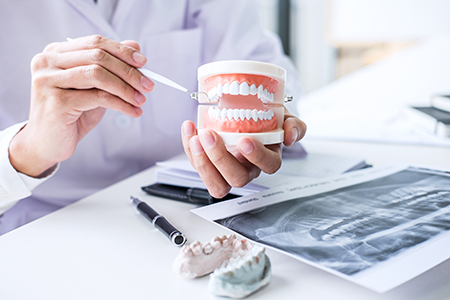
A denture that looks good, fits well, and lasts takes a deep understanding of how the mouth works, facial appearance, dental materials, and appliance design. At Park View Smiles, we stay current with advances in dentistry and bring together its art and science to give our Chicago patients excellent care.
First, we review your medical and dental history, examine your smile, and listen to what you hope to achieve. Then we talk through the best options for restoring your smile.
After a thorough evaluation that includes advanced diagnostic imaging, we will let you know whether you need any dental work, other procedures, or extractions before your partial or complete denture is made. Any teeth you keep must be healthy and have enough bone support. In some cases, we may suggest a pre-prosthetic procedure to reshape the tissues so your denture fits as well as possible.
Making a denture is a detailed process. It includes dental impressions, framework try-ins, choosing the right shade, shape, and size for your new teeth, and confirming that your bite and oral function feel comfortable and healthy. Whether your denture takes one visit or several, a great result depends on doing each step carefully.

Your comfort and care come first at Park View Smiles. We want you to enjoy excellent oral health, and we will keep you informed at every stage.
Adjusting to your new denture
It takes some time to get used to a new denture, especially a full one. Small adjustments are common as you start talking, chewing, and going about your day. Several adjustments may be needed before the fit feels just right. If you notice a sore spot, try to wear your denture for at least the day before your adjustment appointment. That way, we can see exactly which area is causing irritation and ease it.
More saliva than usual
Your mouth will likely make extra saliva when you first wear a new denture. This is normal and temporary. Saliva flow slowly returns to its usual level.
Speaking with ease
Speaking clearly may feel tricky at first, but this usually passes in a few days. Keep talking as you normally would so your mouth can adapt. Reading aloud from a book, newspaper, or screen can help you adjust faster.
Getting used to eating with a denture
If this is your first denture, eating may take some practice. Adjusting to a full denture is usually harder than adjusting to a partial. Begin with soft foods and try not to chew on only one side. Your tongue, lips, cheeks, and soft tissues will soon learn to work with your new denture, and eating will become easy again.
Caring for your dentures
Keeping your denture clean is essential. Rinse it after meals and brush it every day to stop stains and bacteria from building up. A brush made for dentures works best. When you are not wearing your dentures, keep them soaking in water, and soak them in the recommended denture cleaner at least once a week.
Brush your gums and any natural teeth to keep them clean and your tissues healthy and firm. If you wear an upper denture, rinse and gently clean the roof of your mouth too.
Remove your dentures before bed. This lets your gums and jawbone rest, which helps prevent irritation, infection, and bone resorption (shrinkage).
Added stability
Depending on the condition of your gums and other factors, some full dentures need extra help staying in place. Denture adhesive is often enough. Full dentures that are implant-supported or clip onto special attachments provide even more stability and retention.
Follow-up care
Regular checkups help protect your oral health and overall well-being. At these visits, we check how your dentures fit and look, and we perform a comprehensive exam to review any remaining teeth and the health of all the soft and hard tissues in and around your mouth.
Relines
The tissues under your denture change over time. As they shrink or reshape, your denture may feel less comfortable or less secure than before. When that happens, we may recommend a separate procedure called a reline.
Park View Smiles is committed to providing the highest quality care. If you have questions or concerns about your new dentures, please contact our office. Ready to get started? You can request an appointment or review our financial options.
It mainly depends on how many natural teeth you have left and how healthy they are. If you still have some strong teeth with good bone support, a partial denture can fill the gaps and keep those teeth from drifting. If all of your upper or lower teeth are missing or need to be removed, a full denture is usually the better fit.
Our team will examine your teeth, gums, and supporting bone, including diagnostic imaging, before recommending the option that suits your needs and goals.
Dentures are built to serve you well for years, but how long yours last depends on your daily care, your oral health, and natural changes in your mouth. The gums and bone under a denture slowly shrink and reshape over time, which can make a denture feel loose or less comfortable.
Regular checkups let your dentist monitor the fit. Often a reline can restore comfort, and in other cases a new denture may eventually be recommended.
Several factors shape the cost, including:
After your evaluation, our team will explain your options and create a plan that fits your needs and budget. You can also ask about our financial options.
Not necessarily. An immediate denture is placed right after your teeth are removed, so you have teeth while your extraction sites heal. Because your gums change shape during healing, an immediate denture usually needs adjustments and a reline along the way.
Some patients later move to a conventional denture for the best long-term fit. Your dentist can help you decide whether an immediate or conventional denture makes more sense for you.
It is best to remove your dentures before bed. Taking them out overnight gives your gums and jawbone a chance to rest, which helps prevent irritation, infection, and bone shrinkage.
While they are out, keep your dentures soaking in water so they do not dry out, and use a recommended denture cleaner at least once a week.
Not everyone does. Partial dentures typically stay in place with clasps or precision attachments on nearby teeth. Some full dentures need a little extra help depending on the condition of your gums, and adhesive is often enough.
If you want more stability, implant-supported dentures or overdentures that clip onto special attachments offer greater security. Ask your dentist which option fits your situation.
The number of visits varies from person to person. The process starts with a review of your history, an exam, and diagnostic imaging, and some patients need extractions or other treatment first.
Making the denture involves impressions, try-ins, choosing the shade, shape, and size of your teeth, and checking your bite. Follow-up adjustment visits are also common as you get used to your new smile. Our team will outline your timeline during your consultation.
Contact our office so your dentist can check the fit. Over time, the tissues under a denture change, which can make it feel less secure or create sore spots. Often an adjustment or a reline can bring back comfort.
If you have a sore spot, try to wear your denture for at least the day before your appointment so we can see exactly where the irritation is coming from. Avoid adjusting the denture yourself.

Family, cosmetic, and implant dentistry in Chicago's Loop, across from Millennium Park.
