
At Park View Smiles, we believe the surest way to keep your smile healthy and attractive is to stay a step ahead of problems. Regular checkups and routine care at our Michigan Avenue office let us help you and your family stop many oral health issues before they start or before they get worse.
Our skilled, experienced team provides a full range of preventive services. These include thorough exams, professional teeth cleanings, and oral cancer screenings. We also take time to teach you about hygiene, diet, and everyday habits that protect your teeth and gums.
Your first appointment gives us a starting point for your oral health and helps us understand what matters most to you. We start by going over your medical and dental history and listening closely to any concerns or symptoms you have.
Next comes a careful clinical exam. It includes an oral cancer screening, a periodontal evaluation, and a review of your occlusion, or bite. When needed for a complete picture, we will suggest and take diagnostic films.
During the exam, we look at your teeth, the bone and soft tissue that support them, and the nearby areas of your mouth, head, and neck. We watch for signs that you clench or grind your teeth, and we check how your TMJ (temporomandibular joint) is working. A complete exam can also show how diet, eating disorders, medications, harmful habits, or gaps in your hygiene routine may be affecting your smile.
We want every patient to have a smile that is both healthy and beautiful. At Park View Smiles, your exam is done with great care by a team that pays attention to your needs. Once we review your exam results and diagnostic films, we will explain what treatment, if any, may be needed and walk you through all of your options.

At Park View Smiles, we see a healthy smile as more than a nice feature. It plays a real role in your overall health. Problems with your teeth, gums, jaws, and the structures around your mouth can affect how you feel throughout your body.
While we check for common conditions like tooth decay and gum disease and screen for oral cancer, we also look for signs of health concerns that may have started somewhere else in the body.
Research continues to uncover new connections between poor oral health and systemic disease. A growing body of evidence suggests dental disease may play a part in health problems such as:
Digestive disorders
Respiratory problems
Cardiovascular disease
Stroke
Diabetes
Alzheimer's disease
The connection works both ways. Illness in the body can also show up in the mouth. Statistics indicate that more than 90% of all systemic diseases, meaning conditions that affect the body's organs and systems, can produce signs and symptoms in the oral cavity. Dry mouth, bad breath, gum trouble, ulcers, or other sores in the mouth can point to an underlying medical condition.
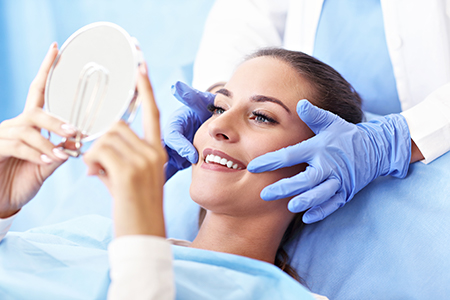
A smile that looks great and works well takes ongoing attention. Keeping your mouth in top shape calls for a solid hygiene routine, healthy eating, regular checkups, professional cleanings, and a complete preventive care program.
Please don't wait until you are in serious pain or suspect a problem to see the dentist. A routine checkup and cleaning helps keep your smile looking and working its best.
We encourage patients to visit twice a year for checkups and professional cleanings. These visits let us track your oral health, lower your risk of dental disease, and catch problems early, when treatment is usually simplest.
Daily brushing and flossing at home are essential, but even the most careful brushers and flossers can miss tight spots between the teeth and along the gumline. That is why professional cleanings are so valuable. Our hygienist removes built-up plaque and tartar, including in places you may not reach. Plaque holds the bacteria that cause cavities and gum disease, so clearing it away helps stop those problems before they begin. After your cleaning, we polish away surface stains, leaving your mouth feeling fresh and clean.
Checkups and cleanings are also a great time to fine-tune your home care. As your partner in care, we will explain and show you the right way to brush, floss, and follow other healthy habits.
Good dental care matters at every age, and it is especially important for children as they build the habits that shape their oral health for life. Through routine checkups, preventive treatment, and age-appropriate lessons on caring for their teeth, we help your kids protect their smiles from dental disease. We also keep an eye on how their teeth and jaws develop as they grow, so we can tell if orthodontic intervention may be needed to straighten their smiles. Learn more about our pediatric dentistry.
Our aim is to help everyone in your family build healthy habits that last. At Park View Smiles, we take pride in our reputation for skilled, caring dentistry. We work to make each visit a positive one, build lasting relationships with our patients, and deliver excellent care.
A close visual exam tells us a lot, but some things can only be seen with dental x-rays or radiographs. X-rays let us see the inner structures of the teeth along with the surrounding bone and tissue. Beyond revealing dental disease, they give us useful details about the growth, health, and strength of your teeth and facial structures.
Technology has brought x-rays into the digital era. Older film methods needed longer exposure times and chemical developing. Today, digital sensors and connected software capture, store, and organize x-ray images.
Digital radiography has several advantages for patients:
Faster, with minimal exposure to x-ray radiation
Images are ready to view right after they are taken
Images can be shared electronically
Digital radiographs need no developing chemicals, produce less waste, and are better for the environment
Images go straight into your electronic record, where they are easy to view on screen, share, or print.
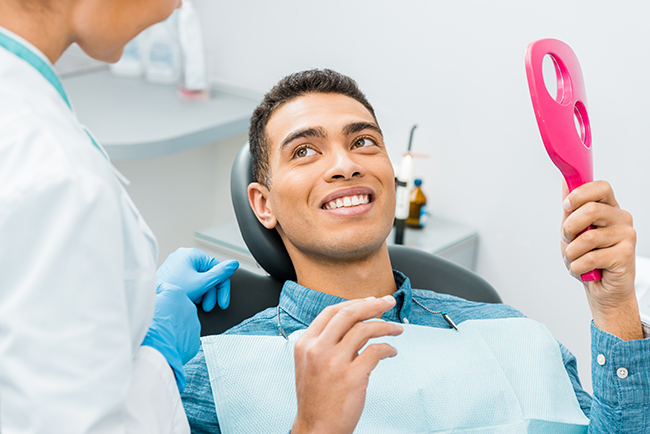
The images we recommend depend on the reason for your visit and your specific oral health needs.
Here are some of the most common diagnostic films and what each one shows:
Periapical x-ray: A small film usually taken of a single tooth. It shows the whole tooth, from the top of the crown to the tip of the root, plus the nearby bone.
Bitewing x-ray: A small film that gives a detailed look at the crowns of the premolars or molars. It is most often used to check for decay.
Full mouth series: A set of bitewing and periapical views covering every tooth.
Panoramic film (panorex): A 2D panoramic image of all the teeth and both sides of the jaw. It shows erupted, developing, and impacted teeth and lets us evaluate the health and strength of the jawbone.
Ready for your next checkup? Request an appointment at our office at 30 North Michigan Ave., Suite 920, in Chicago, or visit our new patients page to learn what to expect.
The length of your visit depends on your needs. A first checkup often takes a bit longer because we review your medical and dental history, listen to your concerns, complete a careful clinical exam, and take diagnostic films if they are needed.
Routine follow-up exams paired with a professional cleaning are usually more streamlined. If you have a tight schedule, let our team know when you book so we can plan your visit accordingly.
For most people, a routine oral exam is comfortable. Your dentist looks at your teeth, gums, bite, jaw joint, and the soft tissues of your mouth, head, and neck, which involves gentle touching and visual checks.
If you have sensitive teeth, sore gums, or feel anxious about dental visits, please tell us. Our team will explain each step and work to make your visit as relaxed and positive as possible.
Not necessarily. The images we recommend depend on the reason for your visit, your oral health history, and your specific needs. Some visits may call for bitewings to check for decay, while others may need a periapical or panoramic image, and some visits may not need any new images at all.
Your dentist will explain why a particular x-ray is suggested so you can feel informed about your care.
Digital radiography uses minimal exposure to x-ray radiation and is faster than older film methods. Images appear on screen right away, so there is no chemical developing involved.
We only recommend x-rays when they help give a complete picture of your oral health. If you are pregnant or have questions about radiation, talk with your dentist before any images are taken so we can address your concerns.
A little preparation helps your visit go smoothly. Consider bringing:
Brushing and flossing beforehand is always welcome. Our new patients page also explains what to expect on your first visit.
If your exam or diagnostic films reveal an issue, such as a cavity, gum concerns, or signs of grinding, your dentist will explain what was found in clear terms. We will walk you through your treatment options so you can make an informed choice.
Catching problems early often means treatment is simpler. Nothing moves forward without your understanding, and we are happy to answer any questions you have.
Good dental care matters at every age, and early visits help children build habits that last a lifetime. Routine checkups let us monitor how your child's teeth and jaws are developing and spot whether orthodontic care might be helpful later on.
Our team can talk with you about the right time to begin visits for your child. You can also learn more on our pediatric dentistry page.
The cost of a checkup can vary depending on what your visit includes. Factors may include whether it is your first visit, which diagnostic films are needed, whether a professional cleaning is done at the same appointment, and any additional evaluations.
Coverage also differs from one dental plan to another. Our team can help you understand what to expect before your appointment, so feel free to ask when scheduling.

Family, cosmetic, and implant dentistry in Chicago's Loop, across from Millennium Park.
